Producing cleaner fuel injectors

Test CEC F-23-01 is a laboratory protocol designed to measure the effectiveness of a fuel at preventing deposits from forming in fuel injectors. To demonstrate the cleaning power of Techron® D, a quantity of diesel fuel is split into two samples. One sample is dosed with the required quantity of Techron® D. Both samples are tested using clean fuel injectors at the start of the test.After 10 hours of cyclical operation, the injectors are removed from the engine and flow tested to measure how effective the fuel has been at preventing injector fouling.Tests conducted at an ISO9001 accredited laboratory in 2008 showed that the injectors running on diesel with Techron® D were cleaner than those running on diesel without Techron® D. Deposits can upset the injector spray pattern and hinder the fuel-air mixing process. This can result in decreased fuel economy and increased emissions.
Cleaner injectors = BETTER FUEL ECONOMY
Maintaining cleaner fuel injectors to deliver more power

Diesel fuel injectors have always been prone to injector choking. However, the potential for negative impact on engine performance, emissions and fuel consumption is increasing as injector designs become progressively more sophisticated. The latest Euro 5 type injectors fitted to the Peugeot DW10 2.0 litre common-rail engine have 6 injector holes that are 110 microns in size, about the width of two human hairs.
Test CEC F-98-08 is a laboratory protocol designed to test how well an additive can keep fuel injectors free of performance robbing deposits. The level of injector deposit build-up is measured indirectly through engine power loss. The CEC F-98-08 test sequence is very rigorous and includes 32 hours of high load engine operation.
To demonstrate the cleaning power of Techron D, a quantity of diesel fuel is split into two samples. One sample is dosed with the required quantity of Techron D. Both samples are tested using new fuel injectors at the start of the test. During the course of the test, injector deposits build-up and the power generated by the engine is reduced.
Tests conducted at an ISO9001 accredited laboratory in 2008 showed that Techron D was able to protect against injector deposits which rob engines of power. At the end of the CEC F-98-08 test sequence, diesel with Techron D produced more power than diesel containing no Techron D.
Cleaner injectors = MORE POWER
Producing less foam for a cleaner, faster fill

NF-N07-075 is a laboratory test designed to measure diesel foaming, including the maximum foam height and how quickly the foam collapses. The same diesel is measured into two containers and Techron® D is added to one. 100ml of diesel is injected into a 250ml measuring cylinder under a constant pressure of 400mbar. The maximum foam height is recorded, as well as the time taken for the foam to collapse. The diesel with Techron® D produced less foam and a faster collapse time than the diesel that did not contain Techron® D. This results in a cleaner, faster filling experience for our customers.
Less foam = CLEANER FASTER FILL
Protecting metal surfaces

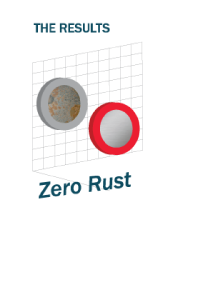
Test ASTM D665 is a standard laboratory test that can demonstrate how well an additive protects metal surfaces from corrosion.To create accelerated conditions for corrosion, 30ml of water is added to 300ml of diesel and heated to 60°C and continually stirred for 4 hours. The test is run in duplicate with the same diesel in each replicate, except one containing the required amount of Techron D®. When the rods were removed for inspection the sample in the diesel without Techron D® had visible rust spots and the rod that was in the diesel with Techron D® remained rust free. Techron D® contains powerful corrosion inhibitors that protect the metal surfaces by forming a protective barrier from corrosive agents.
Less Corrosion = MORE RELIABILITY